Sciatica describes a pattern of nerve-related pain that may travel from the lower back or buttock into the leg. It does not, by itself, identify the underlying cause. Persistent or worsening symptoms deserve an evaluation; new bladder or bowel changes, saddle-area numbness or rapidly worsening leg weakness need emergency medical assessment.
What can cause sciatica?
An irritated or compressed nerve root in the lower back can produce radiating leg symptoms. A herniated disc or narrowing around the nerves, called spinal stenosis, may contribute.
Symptoms can include shooting or burning pain, tingling, numbness or weakness. But the route of the pain is only one clue. An examination is needed to determine whether the symptoms fit nerve involvement or another problem.
Why does the cause matter?
Two people who both say “I have sciatica” may need different next steps. Your history, examination findings, function and goals should shape the recommendation—not simply the label.
At Better Chiropractic in Gilbert, our patient-centered, evidence-informed approach begins with understanding what is happening and whether care in our clinic is appropriate. An evaluation is not a promise that an adjustment is the right treatment.
What might an evaluation include?
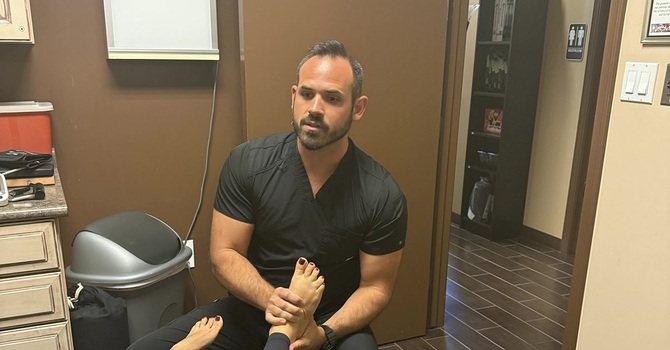
Dr. Brennan Bates or Dr. Will Curtis may ask when the symptoms began, how far they travel, whether sensation or strength has changed, and what makes everyday tasks difficult.
Depending on the findings, an examination may assess:
- Walking and movement tolerance.
- Leg and foot strength.
- Sensation and reflexes.
- Relevant nerve-tension testing.
- Functional limitations and activity goals.
The purpose is to build a clinical picture and decide whether conservative care, imaging, medical evaluation or referral is appropriate.
When should I seek emergency care?
Go to an emergency department for back or leg pain with new difficulty starting urination or inability to urinate, new loss of bladder or bowel control, numbness around the groin/genitals/buttocks (“saddle” area), or rapidly worsening leg weakness. New symptoms in both legs also warrant emergency assessment. Do not wait for a routine chiropractic appointment.
These symptoms do not prove a particular diagnosis, but can indicate serious nerve compression that needs urgent hospital evaluation.
When is a routine evaluation appropriate?
Arrange an assessment when leg pain persists, repeatedly returns, worsens or interferes with walking, work, sleep or activity. New weakness, such as difficulty lifting the front of the foot, needs prompt medical assessment rather than waiting to see whether it resolves.
What happens after the evaluation?
If conservative care is appropriate, recommendations may include activity guidance and individualized rehabilitation, with hands-on treatment when clinically indicated. We monitor the response and adjust the plan. If the findings point elsewhere, referral is part of responsible care.
Frequently asked questions
Is all pain down the leg sciatica?
No. Location alone is not enough to identify the cause.
Can sciatica happen without much back pain?
Yes. Leg symptoms may be more noticeable than back discomfort.
Does every patient need the same treatment?
No. Recommendations depend on findings, safety and individual goals.
Should I try the same stretch I saw online?
A generic stretch is not a diagnosis or an individualized plan. Seek assessment if symptoms persist or worsen.
What should I bring?
Bring relevant medical history, a medication list and any existing imaging reports, along with a description of your symptoms and goals.
Ready to understand your next step?
Schedule a back and leg pain evaluation with Better Chiropractic in Gilbert:
Schedule an evaluation
Educational information only; not a diagnosis or substitute for individualized medical care.